
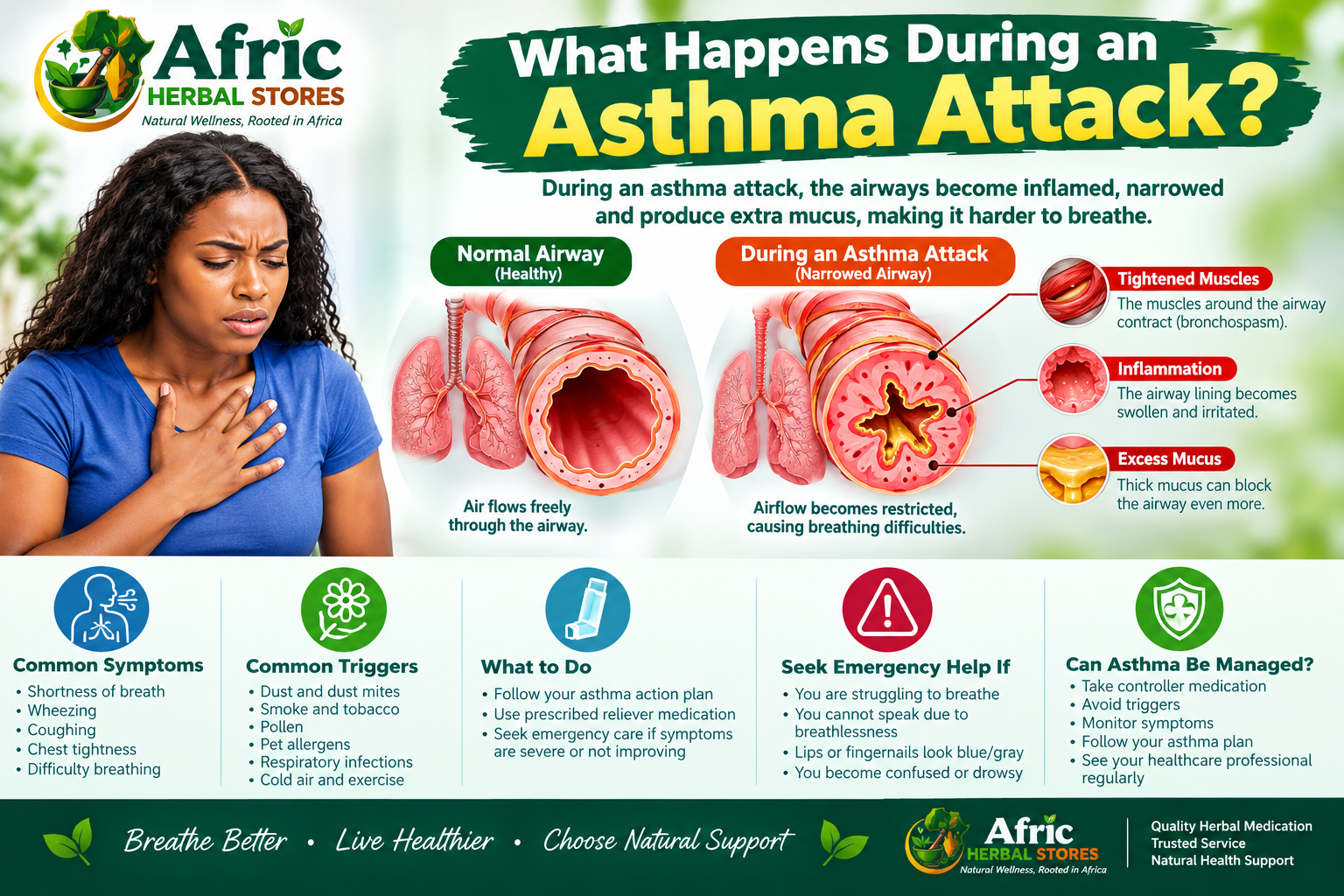
An asthma attack happens when the airways become narrowed and inflamed, making it harder for air to move in and out of the lungs. During an attack, the muscles around the airways can tighten, the airway lining can become inflamed, and mucus production can increase.
Understanding what happens during an asthma attack can help you recognize symptoms early and know when to seek medical attention.
What Happens During an Asthma Attack?
As illustrated in the image, a normal airway allows air to move freely through the lungs. During an asthma attack, several changes can occur at the same time.
1. Airway Muscles Tighten
The muscles surrounding the airways can contract, causing the airways to become narrower. This process is called bronchoconstriction or bronchospasm.
When the airway becomes narrower, breathing can become difficult and may produce a wheezing sound.
2. Inflammation Develops
Asthma involves inflammation of the airways. During an attack, inflammation can increase and contribute to further narrowing of the airway.
This can lead to symptoms such as coughing, chest tightness and shortness of breath.
3. Mucus Production Can Increase
During an asthma flare-up, the airways may produce more mucus than usual. Thick mucus can further obstruct the narrowed airways and make breathing more difficult.
4. Airflow Becomes Restricted
When muscle tightening, inflammation and mucus occur together, less air can move through the airways.
This is why someone experiencing an asthma attack may feel as though they cannot get enough air.
Common Symptoms of an Asthma Attack
Asthma symptoms can vary from person to person. Common symptoms include:
- Shortness of breath
- Wheezing
- Coughing
- Chest tightness
- Difficulty breathing
- Rapid breathing
- Difficulty speaking normally during a severe attack
Symptoms may become worse after exposure to a person’s asthma triggers.
Common Asthma Triggers
Different people have different triggers. Common triggers can include:
- Dust and dust mites
- Smoke and tobacco
- Air pollution
- Pollen
- Pet allergens
- Respiratory infections
- Cold air
- Exercise
- Strong odors or chemical fumes
- Stress or strong emotions
Identifying personal triggers can help people with asthma work with their healthcare professional to develop an appropriate asthma-management plan.
What Should You Do During an Asthma Attack?
If you or someone around you is experiencing an asthma attack, follow the person’s prescribed asthma action plan and use their prescribed reliever medication as directed.
If symptoms are severe, worsening, or not improving with the person’s prescribed rescue medication, seek emergency medical care immediately.
Signs of a Severe Asthma Emergency
Get urgent medical help if someone:
- Is struggling severely to breathe
- Has difficulty speaking because of breathlessness
- Has blue or gray lips or fingernails
- Becomes confused, extremely drowsy or exhausted
- Has symptoms that continue to worsen despite their prescribed rescue medication
An asthma attack can become life-threatening. Do not delay emergency care.
Can Asthma Be Managed?
Yes. Although asthma is a chronic condition, appropriate treatment can help control symptoms and reduce the frequency and severity of attacks.
Asthma management may involve:
- Taking prescribed controller medication consistently
- Using a prescribed reliever inhaler when needed
- Identifying and avoiding personal triggers
- Monitoring symptoms
- Following an asthma action plan
- Attending medical appointments regularly
It is important not to stop prescribed asthma medication simply because you feel better unless your healthcare professional advises you to do so.
Asthma and Herbal Medication
Some people are interested in herbal medication as complementary health support. However, herbal medicines are not a substitute for prescribed asthma treatment or emergency care.
Some herbal products may also interact with medicines or cause unwanted effects. Speak with a qualified healthcare professional before adding herbal medication to your asthma-management routine.
Final Thoughts
An asthma attack can cause the airways to tighten, become inflamed and produce more mucus, making it harder to breathe. Recognizing symptoms and following an appropriate asthma action plan are important parts of managing asthma.
If you frequently experience coughing, wheezing, chest tightness or shortness of breath, speak with a qualified healthcare professional for proper assessment and treatment.
Afric Herbal Medication
At Afric Herbal Medication, we provide herbal medication and natural health-support options while encouraging customers to make informed decisions about their health.
Quality Herbal Medication | Trusted Service | Natural Health Support
Medical disclaimer: This article is for educational purposes only. It does not diagnose, treat or cure asthma and should not replace professional medical advice or prescribed asthma medication.

Discussion
0 CommentsShare your thoughts — every perspective adds value.